In the first hours of Saturday the 12th of July, something extraordinary happened on our quiet little beach in Apollon, Naxos. In the stillness of the night, a green sea turtle (Chelonia mydas) emerged from the Aegean waves and made her way across the sand, where she carefully dug a nest and laid her eggs (Newsbeast, 2025). This moment marks a historic first for the Northern Aegean region—never before has a green turtle been recorded nesting this far north in Greece (Archelon, 2025). It is a truly magical and hopeful sign, not just for our village, but for marine conservation across the Mediterranean.
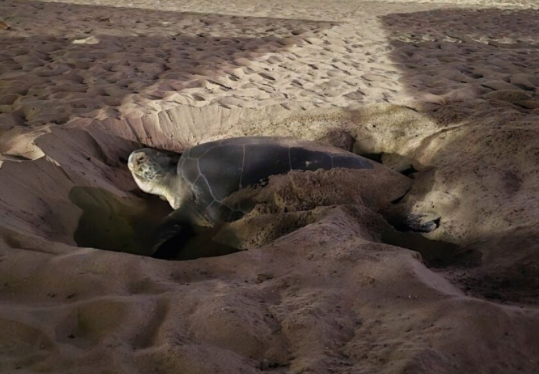
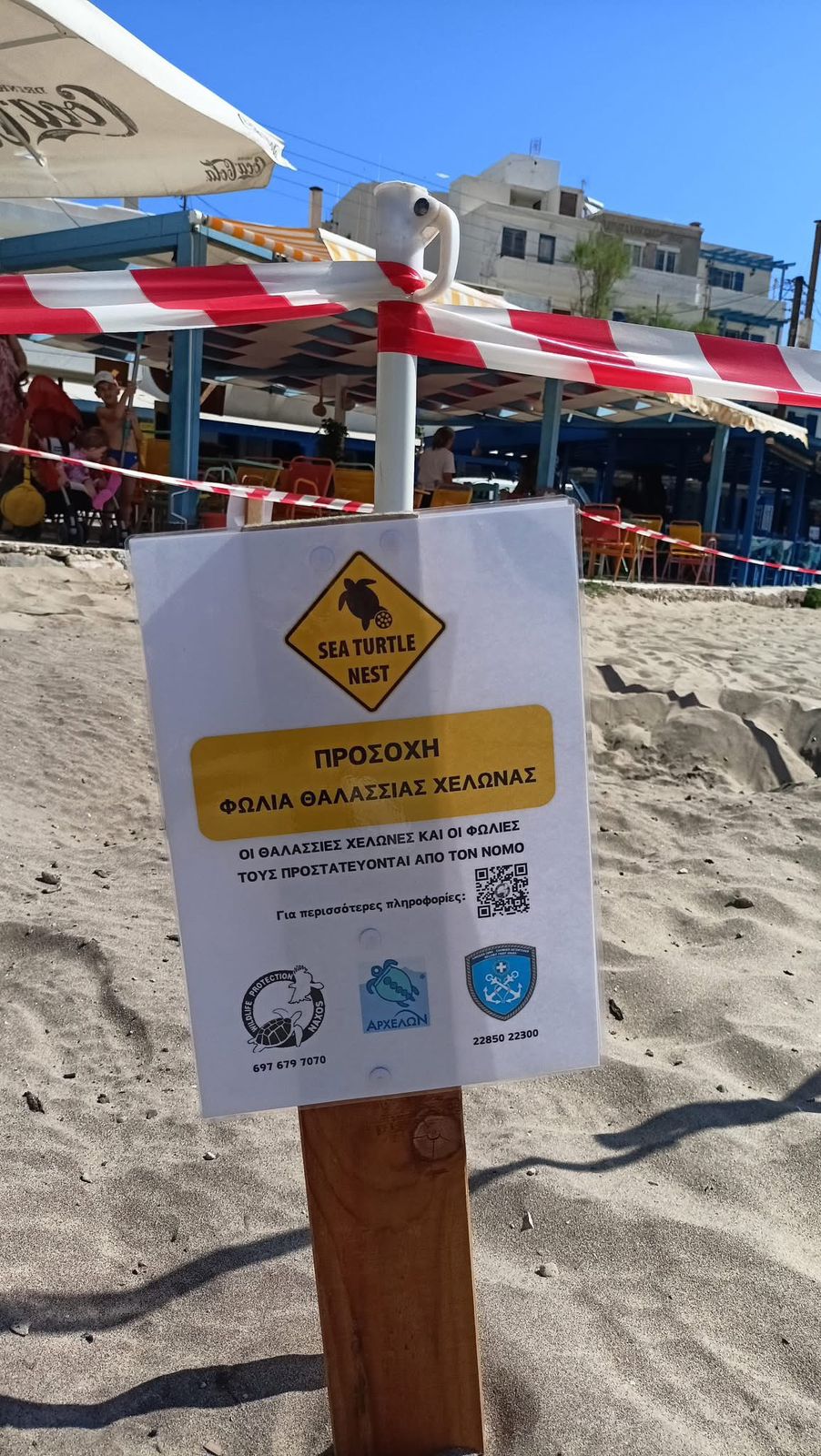
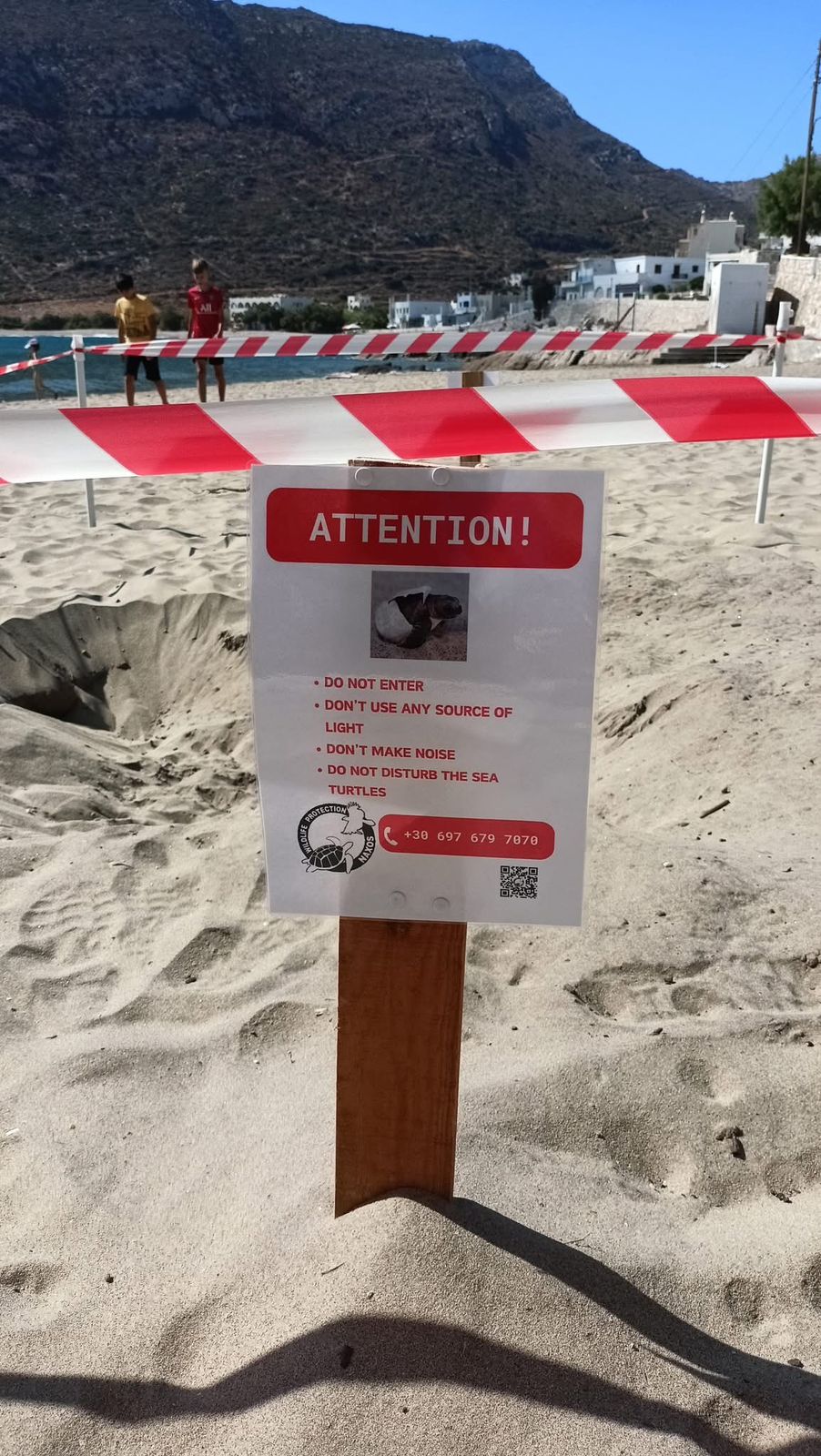
Green sea turtles are one of the ocean’s most iconic species, known for their gentle nature and long migrations. They are listed as endangered by the International Union for Conservation of Nature (IUCN) and are protected by both international agreements and Greek national laws. Adults can weigh up to 200 kilograms and are primarily herbivores, feeding on seagrass and algae—essential roles that help keep underwater ecosystems healthy and balanced (Archelon, 2025; Archipelagos, 2025) .
Nesting for green turtles in the Mediterranean typically occurs from June through September. A single female can lay several clutches of eggs during one season, with each clutch containing anywhere from 50 to over 200 eggs, although the average is about 110. After a quiet incubation period beneath the warm sand, the hatchlings will emerge around 45 to 75 days later—meaning that the eggs on our beach could begin hatching anytime from late August to mid-September. The hatchlings usually make their run to the sea at night, guided by the natural light of the moon and stars, instinctively moving toward the water. However, bright lights and loud noises can confuse or scare the tiny hatchlings. Instead of heading toward the sea, they might crawl in the wrong direction—toward houses, roads, or even get trapped in vegetation. Artificial lights from flashlights, phones, beach bars, or buildings can completely overpower the natural glow of the moon and stars, making it hard for them to find the water. Noise and movement from people can also make them freeze or turn back, using up precious energy they need to survive their first swim (Wikipedia, 2025).
Sadly, moments like this are becoming increasingly rare in many parts of Greece due to ongoing threats facing green turtles. One of the biggest challenges is the loss and disturbance of nesting beaches caused by coastal development and expanding tourism. Pollution—especially plastic waste—often ends up in the sea, where turtles may mistake it for food. Accidental capture in fishing gear such as trawls and longlines is another major danger. In some areas, boat traffic and collisions also pose serious risks. Even climate change is playing a role, with rising temperatures affecting both nesting conditions and the sex ratio of hatchlings (Sea turtles threats, 2025). While conservation groups such as ARCHELON are working hard to monitor and protect nesting sites, these threats continue to jeopardize the survival of green turtles in Greek waters. That’s why this nest on Apollon Beach is so significant—it’s not only a rare event, but a fragile symbol of hope.
Keep in mind: If you’re lucky enough to witness the hatchlings emerging from their nest, it’s important to remember that this is a fragile and critical moment for them. Even though it may be tempting to get close or take pictures, the best thing we can do is quietly observe from a respectful distance. Avoid using flashlights, phone lights, or camera flashes. The hatchlings naturally follow the glow of the moon and stars reflecting on the water, which helps guide them safely to the sea. Try to stay quiet and still, and never pick up or touch the turtles, even if they seem to be struggling. This first journey to the ocean is essential for their development and survival. Keep the path to the water clear, avoid stepping near the nest, and kindly inform others nearby if they’re unaware of how sensitive the moment is. If you believe the hatchlings are in danger or need help, the best thing to do is contact a local conservation group, like ARCHELON, who are trained to handle these situations.
What makes this event even more exciting is the possibility that these hatchlings will return one day. Green turtles, like other sea turtle species, practice what’s known as “natal homing.” This means that when the baby turtles reach maturity—often 20 to 25 years later—they will navigate across vast stretches of ocean to return to the very beach where they were born. If all goes well, some of the tiny turtles that will soon hatch here in Apollon might someday return to lay eggs of their own (The Incredible Journey Home: Understanding Sea Turtles and Natal Homing, 2024).
This remarkable nesting event is more than a natural curiosity—it’s a testament to the importance of conservation efforts and ecosystem recovery. Across Greece, sea turtle populations have shown signs of improvement thanks to decades of protection and awareness. Organizations such as ARCHELON have documented record numbers of nests in recent years, not only in traditional nesting hotspots like Zakynthos and Kyparissia but now expanding to places like Rhodes and, incredibly, our own Naxos.
It is now up to all of us—locals and visitors alike—to protect this nest and support the survival of these ancient mariners. We ask that everyone avoid disturbing the nesting area. This means refraining from placing beach furniture near the site, keeping nighttime lights to a minimum, and avoiding loud noises and flash photography. If you see hatchlings emerge, enjoy the sight from a respectful distance and never try to pick them up or guide them with artificial light. Their natural journey is sacred and should be left undisturbed.
Let this summer be remembered not only for sun, sea, and good food—but also for the miracle of new life beneath the sand. In years to come, we may look back on this as the beginning of a new chapter for Apollon, one in which our village becomes a safe haven for both people and sea turtles alike.
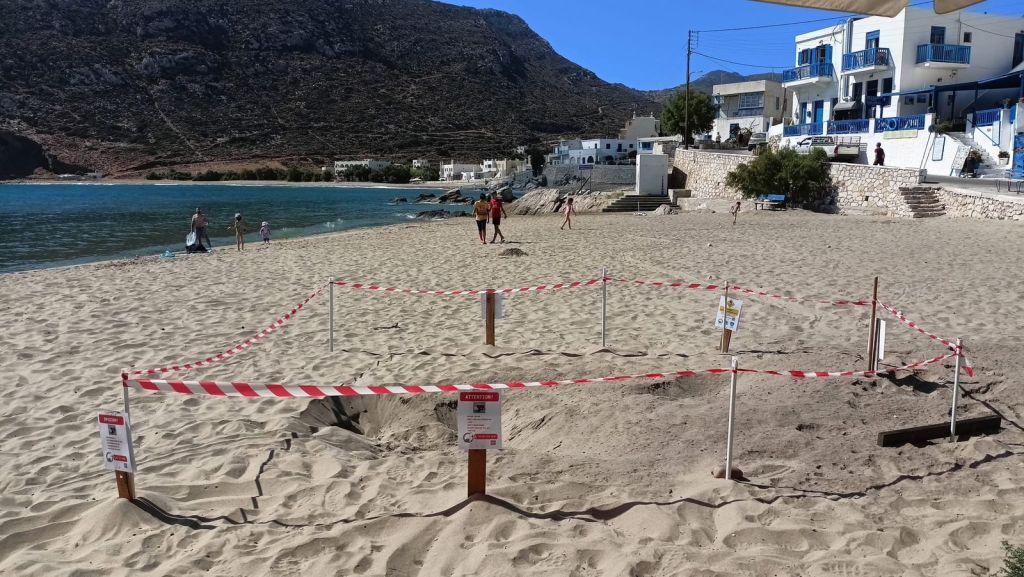
Please do not disturb the nest, protect it from people that may not care or didn’t understand what exactly is that and hopefully you are lucky when the small ones come out and you will see them running to the sea!
Check out more infos, photos and a video of the turtle making the nest in the link below.
https://www.lifo.gr/now/perivallon/naxos-gennise-gia-proti-fora-sto-nisi-prasini-helona?amp
In the Mediterranean you can find 2 more different species. The caretta caretta and the dermochelys coriacea.
More Infos about sea turtles
- https://naxoswildlifeprotection.com/θαλάσσιες-χελώνες/
- https://naxoswildlifeprotection.com/sea-turtles/
Bibliography
- Archelon. (2025, 02 11). Historic Green Sea Turtle Nest Discovered on Rhodes Island, Greece. Retrieved from Archelon: https://archelon.gr/en/news/historic-green-sea-turtle-nest-discovered-on-rhodes-island-greece?utm_source=chatgpt.com
- Archipelagos. (2025). Sea turtles. Retrieved from Archipelagos: https://archipelago.gr/fields-of-action/marine-biodiversity/sea-turtles/?utm_source=chatgpt.com
- Newsbeast. (2025, 07 12). Newsbeast. Retrieved from Ιστορική στιγμή στον Απόλλωνα Νάξου: Πράσινη χελώνα γέννησε για πρώτη φορά στο Βόρειο Αιγαίο: https://www.newsbeast.gr/greece/arthro/12448836/istoriki-stigmi-ston-apollona-naxou-prasini-chelona-gennise-gia-proti-fora-sto-voreio-aigaio-eftiaxe-folia-dipla-se-kafe
- Sea turtles threats. (2025). Retrieved from Sea Turtles: https://www.seeturtles.org/sea-turtles-threats
- The Incredible Journey Home: Understanding Sea Turtles and Natal Homing. (2024, 04 30). Retrieved from Florida oceanographic society: https://www.floridaocean.org/blog/incredible-journey-home-understanding-sea-turtles-and-natal-homing Wikipedia. (2025). Green sea turtle. Retrieved from Wikipedia: https://en.wikipedia.org/wiki/Green_sea_turtle?utm_source=chatgpt.com
 Yannis and Stella @Apollon, Naxos