
Naxos island is located on the Aegean Sea, and it is the largest island of the Cyclades. The climate of the Aegean Sea largely reflects the climate of Greece, which is to say, predominantly Mediterranean. According to the Köppen climate classification, most of the Aegean is classified as Hot-summer Mediterranean (Csa), with hotter and drier summers along with milder and wetter winters. (Aegean Sea, n.d.)
So now let’s find out together what marine algae are.
Algae are heterogeneous group of plants with a long fossil history. Two major types of algae can be identified:
- the macroalgae (seaweeds) occupy the littoral zone and
- the micro algae are found in both benthic and littoral habitats and also throughout the ocean waters as phytoplankton.
Marine macroalgae or seaweeds can be classified into three classes:
- Brown Algae (Phaeophyta),
- Green Algae (Chlorophyta),
- Red Algae (Rhodophyta).
To survive seaweed need salty or brackish water, sunlight and a surface to attach themselves to. Because of these factors they are generally found in the littoral zone (this includes the intertidal zone but generally extends out much further). They are usually found on rocky environment rather than on sand or shingle shores. (Marine algae, n.d.)
The species that we found at Naxos Island and more specifically at Alyko beach located near the Chora of Naxos are the following ones:
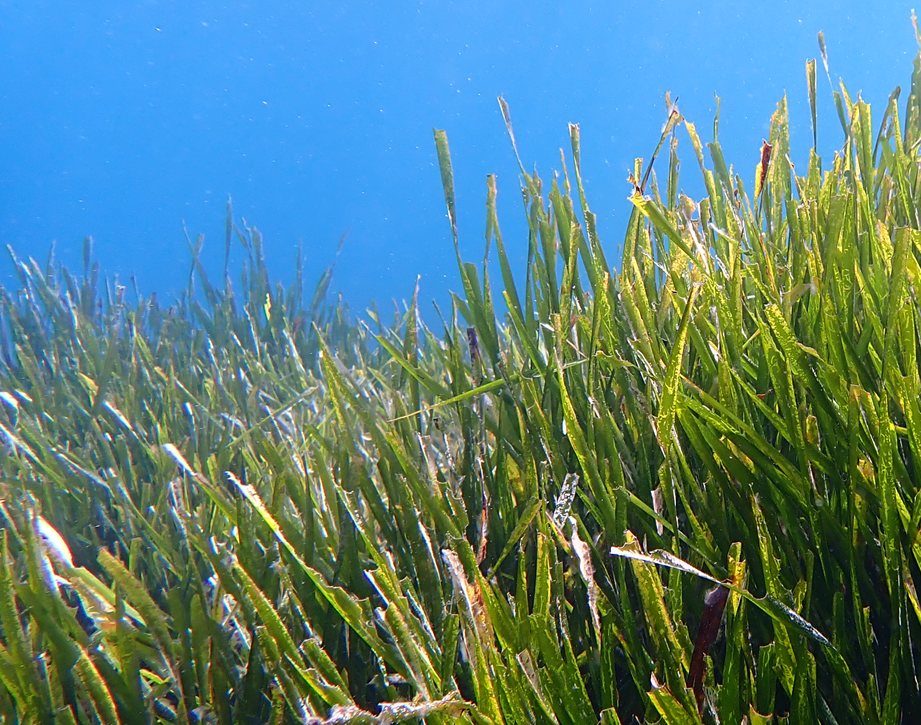
- Posidonia oceanica, commonly known as Neptune grass or Mediterranean tapeweed, is a seagrass species that is endemic to the Mediterranean
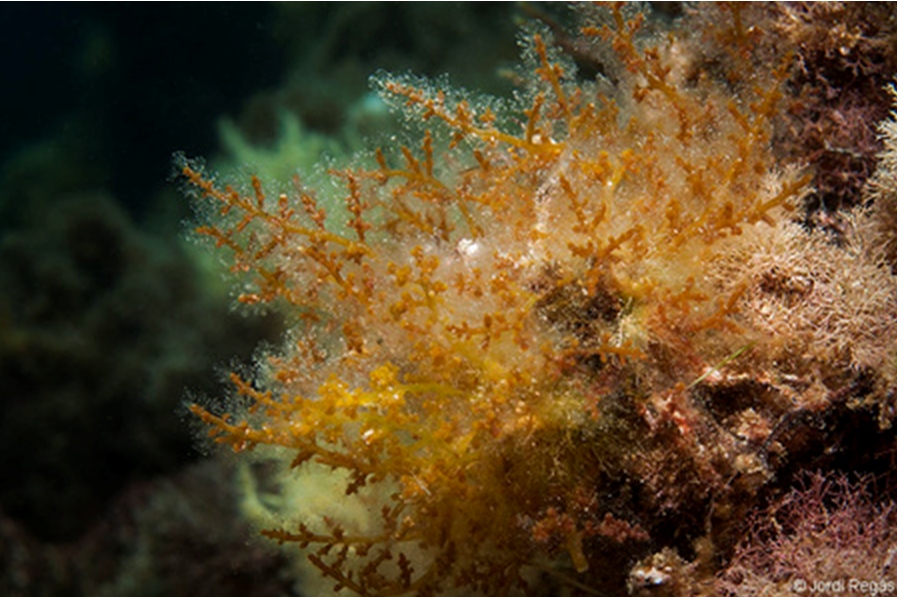
- Laurencia is a genus of red algae that grows in temperate and tropical shore areas.
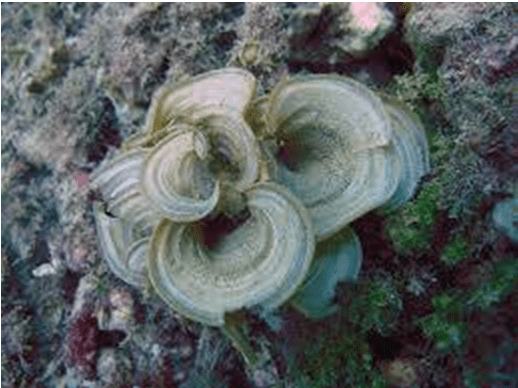
- Padina is a genus of brown macroalgae in the family Dictyotaceae.
- Jania rubens is a genus of red macroalgae

In comparison to Apollon village, which is 45 minutes away from the Chora of Naxos, where we are located and more specifically at Mid sandy beach we found, more or less, the same species, which is acceptable as we have the same environmental conditions for them to grow. However, we found a new species which is the following one:
- Acetabularia is a genus of green algae in the family Polyphysaceae.

Do not forget the ecological importance of marine algae. Scientists estimate that roughly half of the oxygen production on Earth comes from the ocean. The majority of this production is from oceanic plankton — drifting plants, algae, and some bacteria that can photosynthesize. (NOAA, 2023). Except for the production of Earth’s oxygen, algae have the best position as a producer within the food chain, which means they are present in a wide range of food chains. Life in the ocean is primarily dependent on algae because many species eat algae, which is the primary source of life in the ocean. As a result, algae are extremely important and play a critical role in the survival of ocean life. Also, algae play an important role in providing information about water body pollution. There are numerous factors that cause algae to aid us in determining whether water bodies are contaminated. Algae contain a high concentration of nutrients and can be used to make fertilizer. The minerals found in algae are also very beneficial to plastic and can thus be used to create flame-resistant plastics and artificial fibers. Algae can also be used to create medicines. As a result, algae are not only ecologically significant but also economically significant. Those are some of the reasons of which we as responsible people should take care and be careful with our seas and environment. (Ecological Importance of Algae, 2022)
In our next post about Algae we will talk a bit more about each one of them and here the underwater video of Alyko and a video from the mid sandy beach
Here you can see also Aformoi beach underwater!!!
Below Apollon from above! We do not go only underwater
Bibliography
 Yannis and Stella @Apollon, Naxos